Picking driveway pavers feels simple until you actually start comparing options. Brick or concrete. Herringbone or running bond. A pattern that looks great in a photo but might not hold up under a truck parked in the same spot every day. The choice affects how your home looks from the street and how much you’ll spend on repairs five years from now.
This guide breaks down the three things that actually matter when choosing driveway pavers: material, pattern, and climate. Get those right and the rest, color, budget, contractor, falls into place a lot easier.
Why Your Driveway Paver Choice Matters More Than You Think
A driveway takes more abuse than almost any other surface on your property. Vehicle weight, sun exposure, rain, and daily foot traffic all wear on it differently depending on what it’s made of and how it’s laid. Concrete slabs are notorious for cracking under stress and staining from oil or tire marks. Pavers were built to solve that problem. Each paver acts as an individual unit, so the surface flexes slightly instead of cracking outright, and if one gets damaged, it can be pulled and replaced without touching the rest of the driveway.
That flexibility is the main reason homeowners switch to pavers in the first place. But not all pavers perform the same way, and the wrong combination of material and pattern can lead to shifting, drainage issues, or a driveway that looks dated within a few years.
Understanding Driveway Paver Materials
Material is the first decision, and it shapes everything else, including how the pattern reads visually and how the surface handles heat and moisture.
Brick Pavers
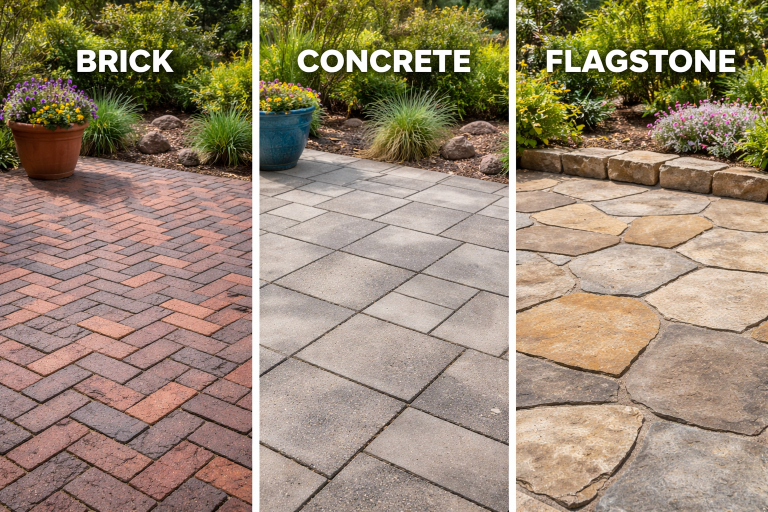
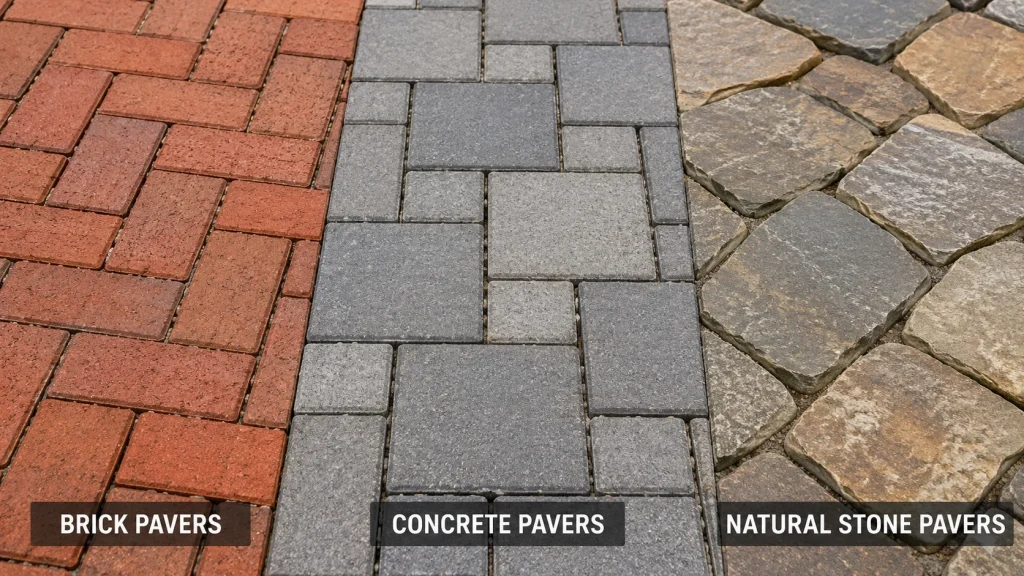
Brick pavers bring a classic, warm look that works well with traditional and colonial-style homes. They’re made from clay, fired at high temperatures, which gives them a dense, long-lasting finish. Brick holds its color well over time and doesn’t fade the way some concrete pavers can under years of direct sun. The tradeoff is cost. Brick tends to run higher than concrete, and the color range is narrower since it depends on the natural clay tones rather than dyes.
Concrete Pavers
Concrete pavers are the most versatile option on the market. They come in nearly unlimited colors, textures, and shapes, including versions designed to mimic natural stone or brick at a lower price point. Concrete pavers are manufactured under controlled conditions, so their strength and thickness are consistent, which matters for a surface that needs to support vehicles daily. The main consideration is that lower-grade concrete pavers can fade or chip over time, so material quality matters more here than with brick or natural stone.
Natural Stone and Flagstone
Natural stone, including flagstone, granite, and travertine, gives a driveway a high-end, custom look that manufactured materials can’t fully replicate. Every piece has its own texture and variation, so no two driveways look identical. Stone is also extremely durable when properly installed. The downside is price and installation complexity. Natural stone costs more upfront and typically requires more skilled labor to cut and fit each piece correctly, especially for a driveway where structural integrity under vehicle weight is non-negotiable.
Interlocking and Permeable Pavers
Interlocking pavers are designed to lock together for added stability, which makes them a strong choice for driveways that see heavy or frequent vehicle traffic. Permeable pavers take this a step further by allowing water to drain through the joints instead of pooling on the surface. For homeowners dealing with drainage problems or runoff restrictions, permeable pavers solve a practical problem while still delivering the look of a traditional paver driveway.
Choosing a Pattern That Fits Your Home
Once the material is set, pattern is what determines how the driveway actually reads visually from the street. The same pavers laid in two different patterns can look like entirely different driveways.
Herringbone
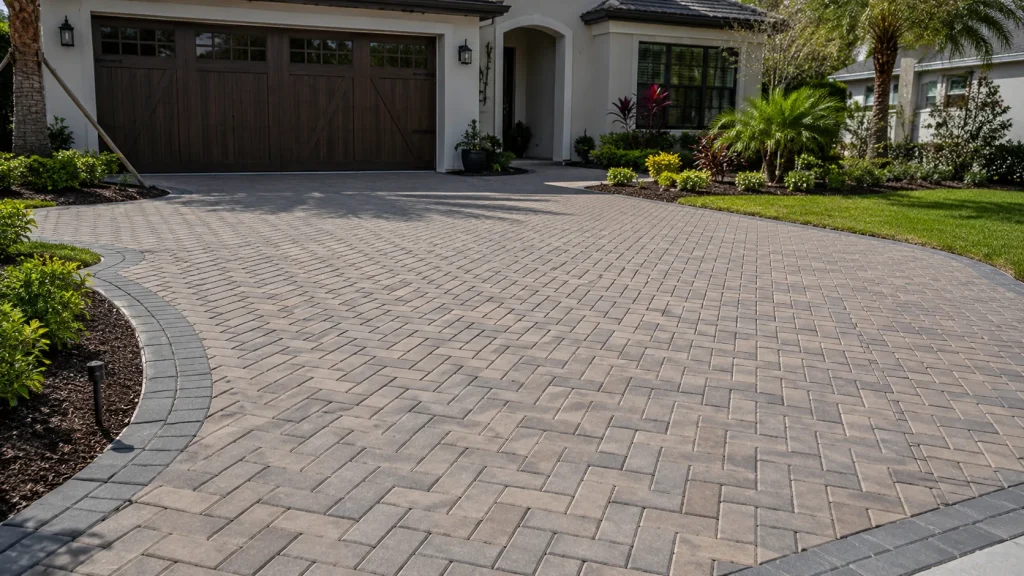
Herringbone is a zigzag pattern that interlocks pavers at 90-degree angles. It’s one of the strongest layout options for driveways because the interlocking design distributes vehicle weight more evenly across the surface, which reduces shifting over time. It also happens to be one of the more visually striking patterns, making it a popular choice for homeowners who want both durability and curb appeal.
Running Bond
Running bond is a simple, brick-like pattern where each row is offset from the one above it. It’s straightforward, cost-effective to install, and works well for homeowners who want a clean, classic look without a lot of visual complexity. It’s a common choice for driveways because it’s easy to repair sections without disrupting the overall pattern.
Basket Weave
Basket weave alternates pairs of pavers in a woven look, creating a textured, symmetrical pattern. It tends to suit more traditional or formal home exteriors and pairs particularly well with brick pavers. It’s not typically recommended for driveways with heavy vehicle turning movement, since the pattern doesn’t lock together as tightly as herringbone.
Custom and Border Patterns
Many homeowners choose a primary pattern for the main driveway surface and add a border in a contrasting color or material to frame the space. Borders can also mark the edge of a driveway more clearly, which helps with both aesthetics and practical boundaries like where a driveway meets a walkway or garden bed.
Climate Considerations for Driveway Pavers in Florida
Material and pattern only tell half the story. Climate plays a bigger role in paver performance than most homeowners expect, especially in a state like Florida where heat, humidity, and heavy seasonal rain are constant factors.
Dark-colored pavers absorb more heat and can get uncomfortably hot underfoot or even affect nearby plant beds during peak summer months. Lighter colors and certain concrete blends stay noticeably cooler, which is worth factoring in if the driveway connects to a pool area or walkway where people are barefoot.
Drainage is another major consideration. Florida’s rainy season brings sudden, heavy downpours, and a driveway without proper base preparation or joint spacing can pool water or erode over time. Permeable pavers, combined with a properly compacted base, help water drain through rather than sit on the surface, which reduces the risk of standing water and long-term erosion.
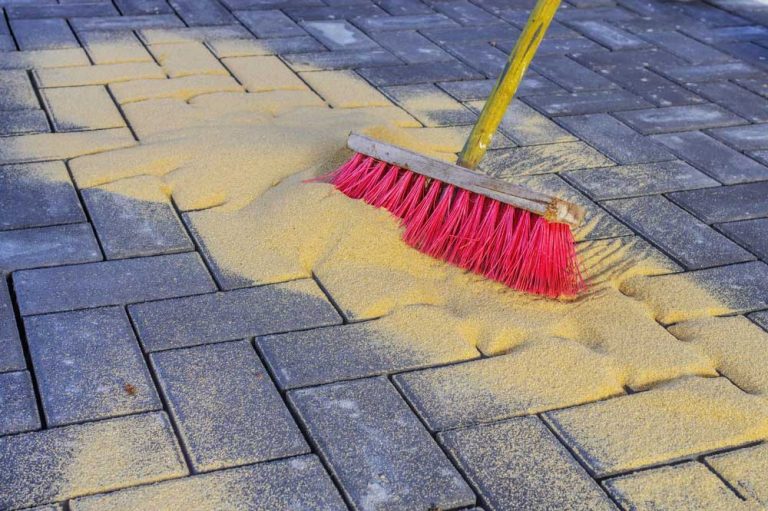
Humidity also affects joint sand and sealant. Polymeric sand, which locks paver joints in place, needs to be applied and cured correctly in Florida’s climate to avoid washing out during heavy rain. A rushed installation that skips proper base compaction or joint sanding tends to show problems within the first year or two, especially in a hot, wet climate that doesn’t give much room for error.
Weight, Traffic, and Long-Term Durability
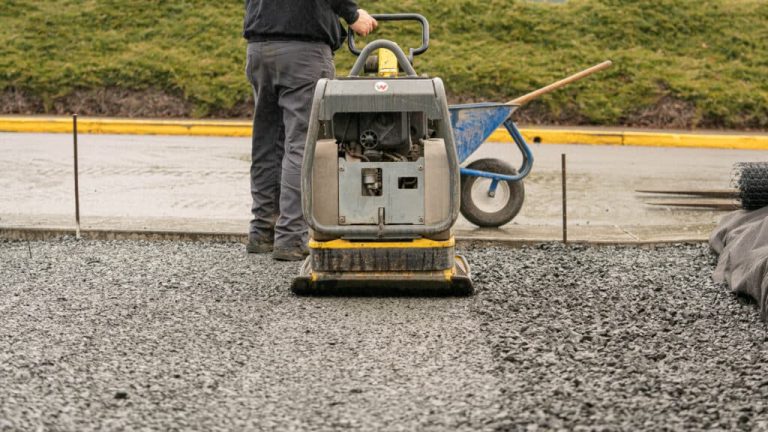
Every driveway needs to handle more than a family sedan. Delivery trucks, moving trucks, and everyday wear from multiple vehicles all put stress on the surface. Paver thickness and base preparation matter as much as material choice here. A properly installed paver driveway includes a compacted gravel base, a layer of bedding sand, and interlocking pavers set tightly enough to distribute weight evenly.
Thinner pavers or a shallow base might save money upfront but tend to shift, sink, or crack sooner under repeated vehicle weight. This is where working with an experienced installer matters. The right pattern and material combination only performs as well as the base it’s built on.
Budget and Maintenance
Cost varies significantly depending on material, with natural stone typically at the higher end, concrete in the middle, and brick landing somewhere between the two depending on style. But the sticker price on installation day isn’t the only cost to consider. Concrete slabs might look cheaper initially, but a crack means either an unsightly patch job or a full replacement. Pavers, by contrast, allow for targeted repairs. A cracked or stained paver can be pulled and swapped without touching the surrounding driveway, which keeps long-term maintenance costs lower even if the upfront investment is higher.
Sealing is another maintenance factor worth planning for. A quality sealant protects against staining, fading, and weed growth between joints, and reapplying it every few years keeps the driveway looking close to new. Homeowners who skip this step often find their pavers fading or collecting grime faster, particularly in a sunny, humid climate.
Making the Final Decision
Choosing the right driveway pavers comes down to matching material, pattern, and climate needs to how the driveway will actually be used. A high-traffic driveway with multiple vehicles benefits from a strong, interlocking pattern like herringbone paired with a durable concrete or brick material. A driveway in a hot, rain-heavy climate benefits from lighter colors and permeable options that manage water and heat more effectively. And a homeowner focused purely on curb appeal might prioritize natural stone or a custom border pattern, provided the base and installation quality support that choice long term.
There’s no single right answer for every home. The right combination depends on the house itself, the climate it sits in, and how the driveway gets used day to day.
If you’re ready to move forward with a driveway that’s built to handle Florida’s heat, heavy rain, and daily wear, explore our driveway paver installation service for expert guidance on material, pattern, and design, or call us at (727) 457-9419 to schedule a free, no-pressure estimate with our in-house team.