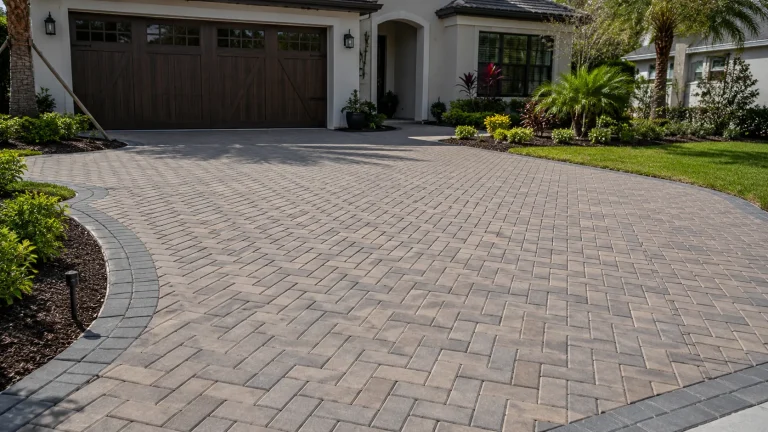
If you’re planning a patio in Florida, the material you choose matters more than most homeowners realize. The heat, humidity, heavy rain, and constant UV exposure will stress-test whatever you put down. Choosing the wrong paver means cracking, fading, shifting, and costly repairs within a few years. Choosing the right one means a patio that looks great and holds up for decades.
This guide breaks down the three most popular patio paver options, brick, concrete, and flagstone, so you can make a decision based on facts, not a contractor’s preference or whatever’s on sale at the home improvement store.
Why the Material You Choose for Your Patio Pavers Matters
A lot of homeowners focus on price per square foot and stop there. That’s a mistake. The total cost of a patio includes installation, maintenance, repairs, and eventually replacement. A cheaper paver that needs resealing every year, cracks under Florida heat, or shifts after a heavy rain will cost you more over time than a more durable option installed correctly from day one.
Beyond cost, the material affects how your outdoor space looks, how safe it is (especially around pools), and how well it complements your home’s exterior. Florida homes in particular need pavers that can handle thermal expansion, resist moisture absorption, and stay slip-resistant when wet. Not all materials check every box equally.
Brick Pavers: Classic Look, Proven Track Record
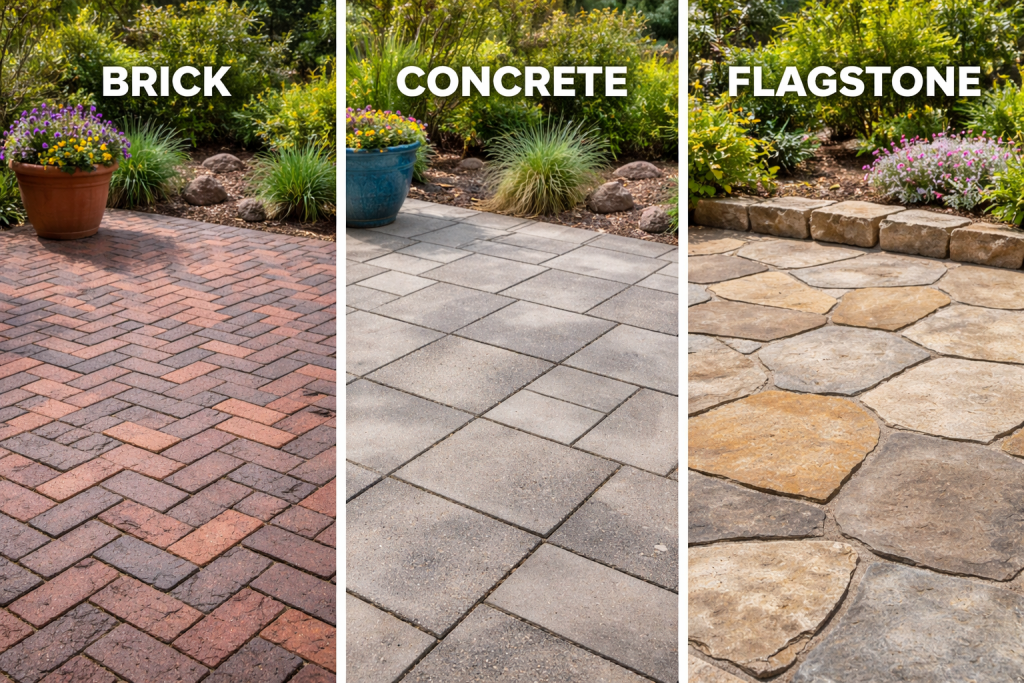
Brick pavers have been used in driveways, walkways, and patios for centuries, and there’s a reason they’re still one of the most requested materials in the hardscape industry. They’re made from fired clay, which gives them a density and strength that holds up well under heavy foot traffic, furniture weight, and temperature swings.
Durability
Brick is one of the toughest paver options available. Fired clay doesn’t absorb much water, which means freeze-thaw cycles (less of a concern in Florida but still relevant in cooler months) won’t cause the internal cracking you see with more porous materials. Brick pavers also resist fading better than concrete over long periods. A well-installed brick patio with proper base preparation and joint sand can last 25 years or more with minimal maintenance.
One of the most practical durability advantages of brick is replaceability. If a paver cracks or gets stained, you can pull it out and replace it individually without touching the rest of the patio. That’s not always possible with poured concrete or large-format flagstone.
Style
Brick pavers have a warm, traditional aesthetic that works well with ranch-style homes, craftsman builds, and classic Florida bungalows. They come in a range of earth tones, from deep reds and warm browns to more muted tans. The pattern options are where brick really shines. Running bond, herringbone, basketweave, and circular patterns all create different visual effects. Herringbone in particular is popular for high-traffic areas because the interlocking pattern adds structural strength.
The limitation with brick is that it leans traditional. If your home has a modern or contemporary exterior, brick may feel out of place. It also tends to have a more uniform texture, which some homeowners love and others find too predictable.
Maintenance
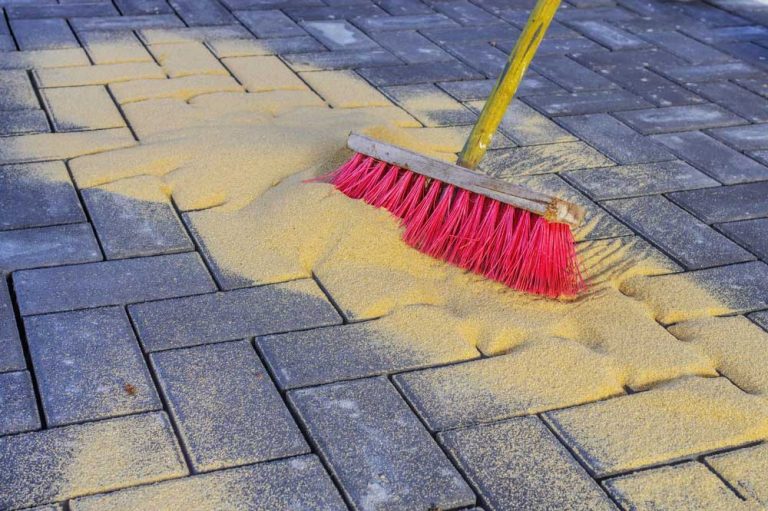
Brick patios need periodic resealing to protect against staining and moisture intrusion, typically every two to three years in Florida’s climate. The joints need to be checked and topped up with polymeric sand over time as rain and foot traffic displace it. Overall, brick is low-maintenance compared to natural stone but requires a little more attention than concrete.
Best For
Homeowners who want a timeless look, high durability, and easy individual paver replacement. Brick is an excellent choice for patios that see heavy use or need to hold up around kids and pets.
Concrete Pavers: Versatile, Affordable, and Built for Florida
Concrete pavers are the most widely installed paver type in Florida, and for good reason. They’re manufactured in a controlled environment to meet specific strength and density standards, which means the quality is consistent. Unlike a poured concrete slab, individual concrete pavers flex with ground movement and are far less likely to crack across the surface.
Durability
Modern concrete pavers are engineered for high compressive strength. Quality pavers are dense enough to resist water absorption, which prevents the softening and surface wear that happens with lower-grade concrete products. They’re also treated with surface coatings that improve UV resistance, which matters a lot in Florida where the sun is relentless from March through October.
The key durability advantage concrete has over a poured slab is that it moves. Florida soil shifts, especially during the wet and dry season cycle. A slab cracks. Individual pavers shift slightly and can be releveled. That’s a significant long-term advantage.
The honest downside is that concrete pavers can fade faster than brick if they’re not sealed regularly. In Florida, plan on sealing every one to two years for pavers in direct sun. Unprotected concrete also picks up staining from leaves, pool chemicals, and organic debris more readily than other materials.
Style
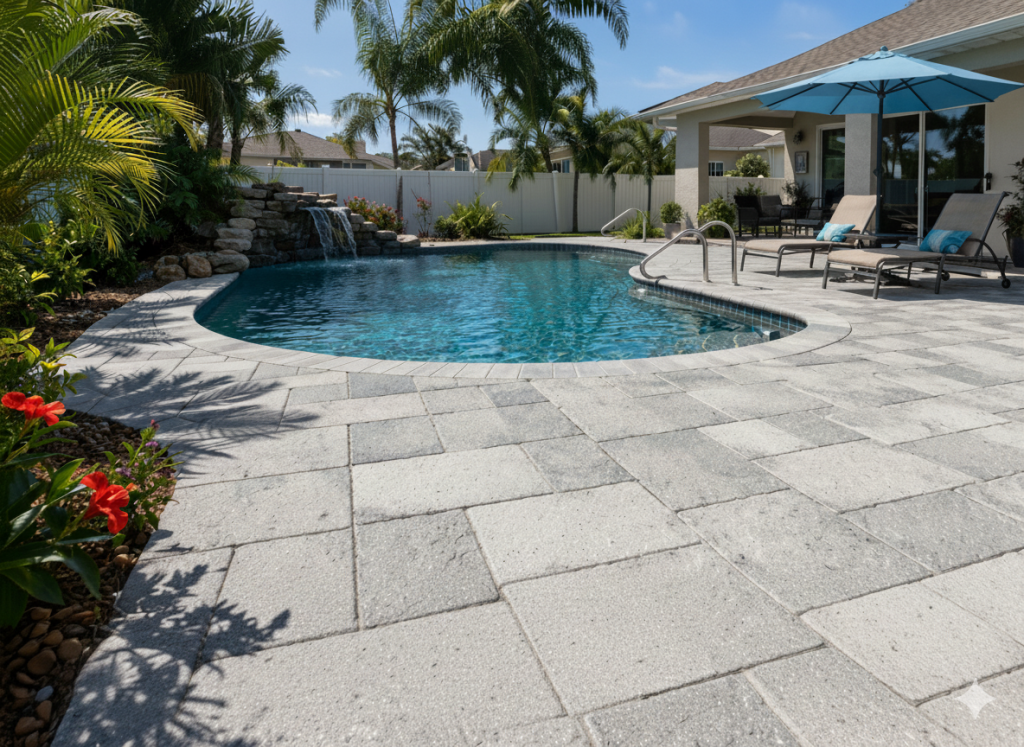
This is where concrete pavers have the clearest advantage. They’re manufactured in more shapes, sizes, colors, and finishes than any other paver type. You can get concrete pavers that mimic the look of natural stone, wood, travertine, or slate. Large-format concrete pavers in light gray or off-white tones are currently one of the most popular choices for modern Florida patios.
Concrete pavers work with virtually any home style. Contemporary homes look sharp with large rectangular pavers in a linear pattern. Traditional homes can use smaller concrete pavers in patterns that echo brick. The flexibility is unmatched.
Maintenance
Concrete pavers need the most consistent maintenance of the three options, specifically regular sealing and joint sand replacement. In Florida’s climate, skipping the sealant schedule leads to faster fading, surface erosion, and weed growth in the joints. Done properly, maintenance is straightforward and not expensive. The mistake homeowners make is waiting too long between sealings and then needing a full restoration.
Best For
Homeowners who want design flexibility, a budget-friendly option, and are comfortable with a regular maintenance schedule. Concrete pavers are also the best match for pool decks where slip resistance and cooler surface temperatures are priorities.
Flagstone Pavers: Natural Character With a Higher Price Tag
Flagstone refers to natural stone cut or split into flat pieces used for paving surfaces. Common flagstone materials used in Florida patios include travertine, limestone, bluestone, and slate. Each has its own look, hardness level, and maintenance needs. Travertine is by far the most popular flagstone choice for Florida outdoor spaces.
Durability
Natural stone is dense and strong, but durability varies significantly between stone types. Travertine is a good choice for Florida because it stays noticeably cooler underfoot than concrete or brick in direct sun, a real advantage for bare feet around the pool. It’s also slip-resistant when textured, which makes it popular for pool decks and outdoor entertaining areas.
The challenge with natural stone is that it’s more porous than manufactured pavers. Unsealed flagstone absorbs water, staining agents, and pool chemicals. In Florida’s climate, unsealed travertine or limestone can develop efflorescence (white mineral deposits) and organic staining if not properly maintained. The other consideration is that natural stone cracks are harder to address. Matching a replacement piece to aged stone is difficult, and repairs can be visible.
Style
Flagstone has a character that manufactured pavers can’t fully replicate. Each piece is unique. The natural variation in color, texture, and veining creates a look that feels organic and high-end. Travertine in particular has a warm, Mediterranean quality that complements Florida’s architectural styles beautifully. It photographs well and has genuine visual appeal that adds perceived value to a home.
For homeowners who want a patio that looks like it was designed rather than just installed, flagstone delivers that feeling. The natural color palette of travertine (cream, walnut, gold, silver) pairs well with stucco exteriors, terracotta roof tiles, and lush tropical landscaping.
Maintenance
Flagstone requires the most diligent maintenance of the three options. Sealing is critical and should be done before the patio is used and renewed regularly. Grout or joint material needs to be monitored for cracking and moisture infiltration. The upside is that a properly sealed and maintained flagstone patio holds its beauty exceptionally well and can last decades.
Best For
Homeowners who prioritize natural aesthetics and are willing to invest in both upfront cost and ongoing maintenance. Flagstone is a strong choice for outdoor living spaces, entertaining areas, and anywhere the visual impact of the patio is a priority.
Comparing the Three: A Practical Summary
When comparing patio pavers for durability, brick holds up the longest with the least intervention. When comparing for style flexibility, concrete pavers give you the most options. When comparing for natural beauty and premium appeal, flagstone wins. There’s no universally correct answer. The right choice depends on your home’s architecture, how the patio will be used, your maintenance commitment, and your budget.
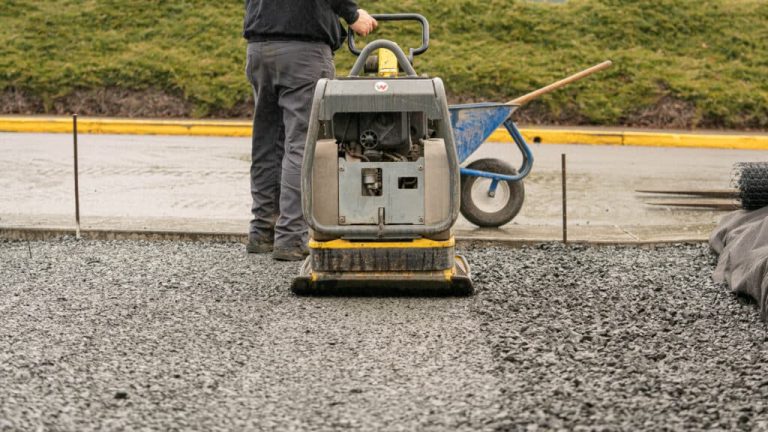
What matters most in Florida specifically is that any of these materials, installed correctly on a properly compacted base with the right joint material and sealant schedule, will perform well. The installation is just as important as the material. A premium flagstone patio installed on a poor base will fail. A standard concrete paver patio installed correctly will last for years without issues.
That’s why working with an experienced local contractor who knows Florida soil conditions, drainage patterns, and climate demands is not optional. It’s the difference between a patio that looks good on day one and one that still looks good ten years later.
Choosing the Right Patio Paver Contractor in New Port Richey
Material selection is only half the decision. The other half is who installs it. An experienced contractor will assess your soil, grade your surface properly, build a stable base, and recommend the right material for your specific yard conditions and how you plan to use the space.
Hilimire Pavers has been installing brick, concrete, and flagstone patios in New Port Richey and the surrounding Pasco County area for over 16 years. Every project is handled by an in-house crew, not subcontractors, and owner Lloyd Hilimire is on-site throughout the job. There’s no deposit required. You don’t pay until the work is done and you’re satisfied.
Explore our patio paver installation service to see completed projects and learn more about what goes into a lasting outdoor space, or call us at (727) 457-9419 to get your free estimate today. Whether you’re starting from scratch or replacing a patio that’s seen better days, we’ll give you a straight answer on what works best for your home and your budget.